Today the world marks the UN International Day of Clean Air for blue skies, a global observance built on a simple fact: air pollution is the single largest environmental risk to human health, linked to around seven million premature deaths a year.
On a construction site, that risk comes from more than one place: plant, machinery and site traffic all add to it. A combustion generator is one of the sources you can actually remove, and often the one running longest and closest to the crew. It runs through the whole shift, a few metres from where people work, and its exhaust does not leave when they move on. It gathers in stairwells, basements and half-finished rooms. Diesel exhaust is a known cause of cancer, and it carries nitrous oxides ( NOx), carbon monoxide (CO) and fine particulates and straight into the air the crew breathes for eight or ten hours. A safe working environment is usually measured in guardrails and hard hats. The air belongs on that same list.
Cities have started to treat it that way. London’s Low Emission Zone for Non-Road Mobile Machinery, the world’s first for construction, already requires generators to meet the cleanest diesel standard, and from 2040 only zero-emission machinery will be allowed on its sites at all. The Netherlands and France are moving the same way.
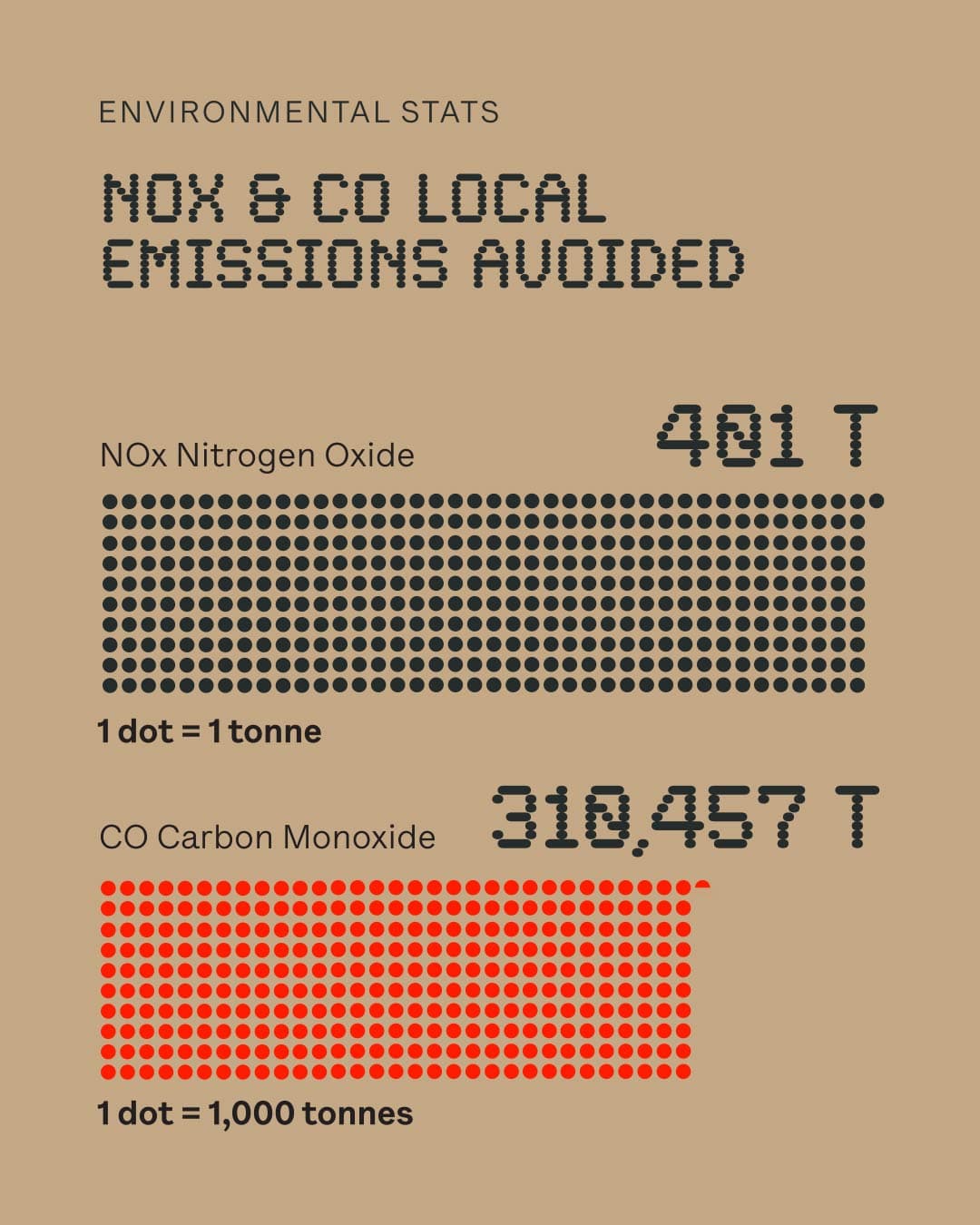
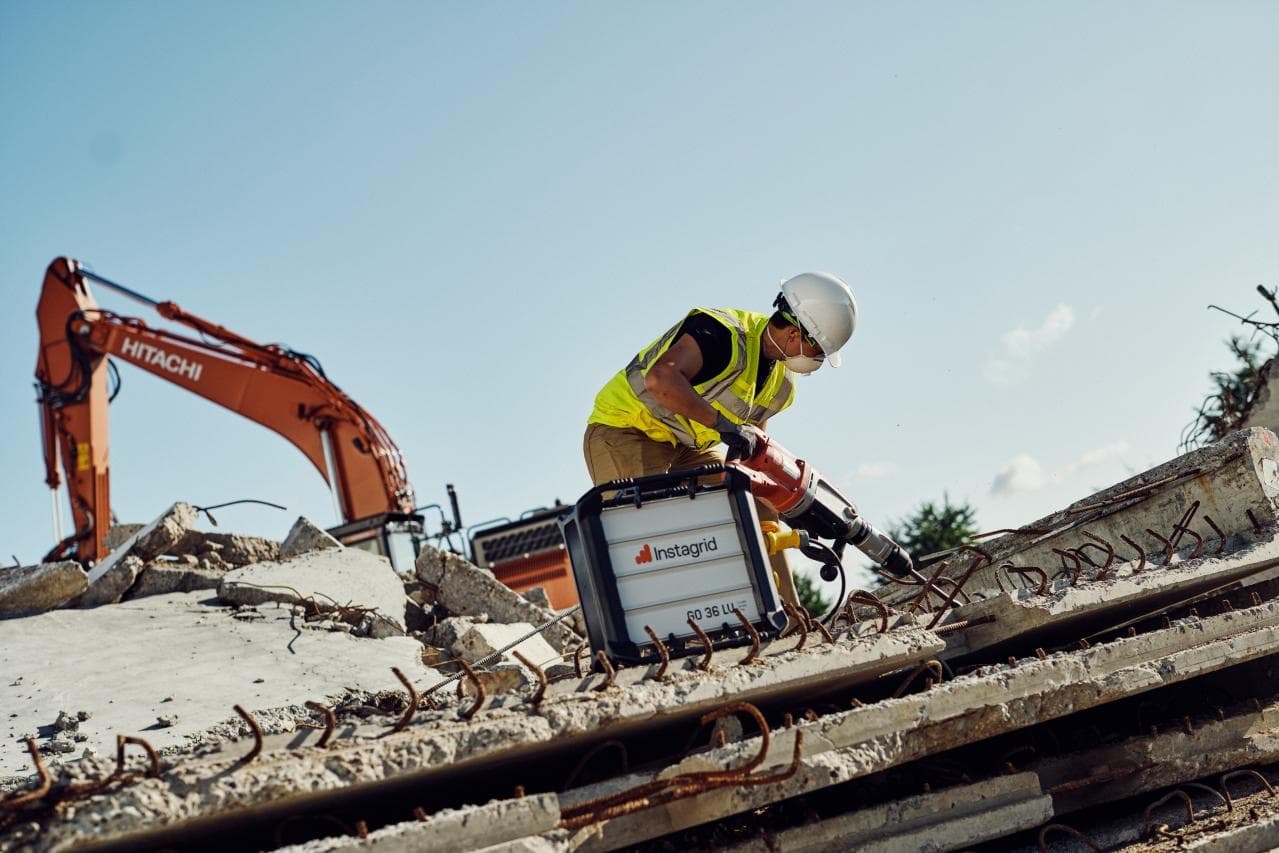
An Instagrid ONE portable power supply closes the gap. It delivers grid-quality power with zero local emissions and no fumes, silently, so the same work gets done without putting anything into the air on site. Since launch until 2025, replacing combustion generators this way kept 401 tonnes of NOx and 310,457 tonnes of CO out of the air around working crews.
Clean air is not an add-on to a safe site. It is part of one.
Read Instagrid’s Impact Report 2025 for more details: https://instagrid.co/impact